Why Facebook CAPI is Mandatory in 2025 for Every Digital Marketer
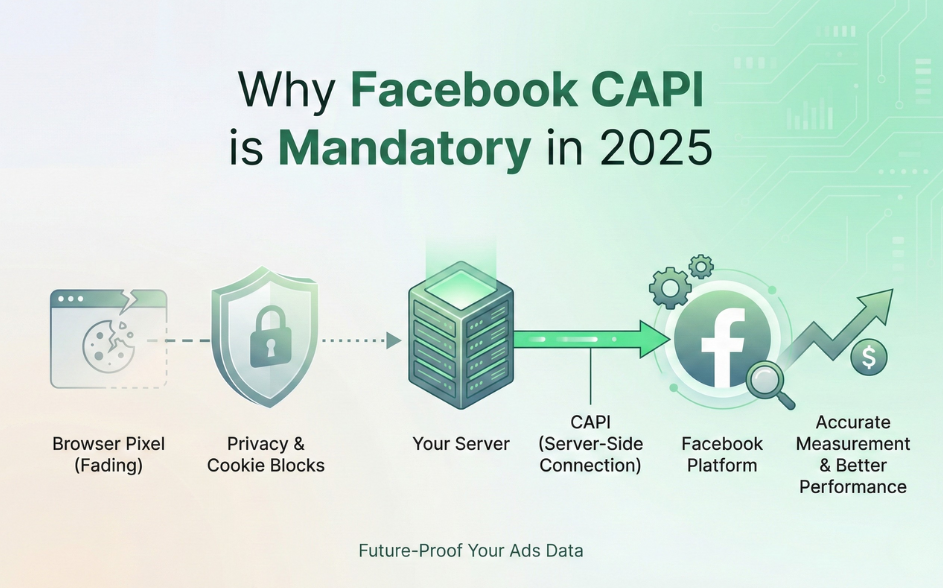
If you are running ads on Meta platforms today, you have likely noticed that your results are becoming less predictable. Your Ads Manager might show five sales, while your actual store dashboard shows ten. This data gap is a growing crisis for businesses. This is exactly Why Facebook CAPI is Mandatory in 2025. The old way of tracking customers through a browser pixel is no longer enough to keep your campaigns profitable.
Facebook Conversion API, or CAPI, is a server-side tool that allows you to share web events directly from your server to Facebook. Unlike the standard Pixel, which lives in the user's browser, CAPI creates a direct, secure link between your website and Meta. With ServerTrack.io, implementing this mandatory technology is now simple, helping you reclaim the data that ad blockers and privacy updates have been hiding.
The Death of the Browser-Only Pixel
For over a decade, the Meta Pixel was the king of tracking. It was easy to install and worked well. But as we move through 2025, the browser environment has become a hostile place for tracking scripts. Here is why the pixel alone is failing:
- The End of Third-Party Cookies: Major browsers have now fully restricted third-party cookies. This means the pixel cannot "remember" users who don't convert instantly.
- Advanced Ad Blockers: Almost a third of internet users now use tools that stop the Facebook Pixel from even loading on the page.
- iOS and Privacy Laws: Apple's ATT framework and global laws like GDPR have given users more power to opt-out of browser tracking.
When you rely only on a pixel, you are effectively flying your marketing plane with a broken radar. This is Why Facebook CAPI is Mandatory in 2025—it provides the backup data needed to keep your marketing AI working correctly.
How ServerTrack.io Makes CAPI Implementation Simple
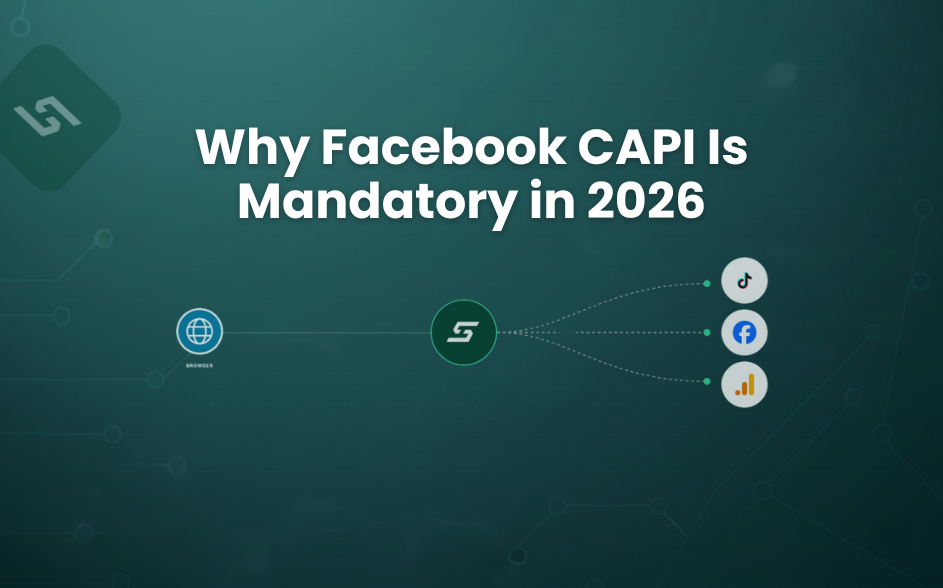
Many business owners avoid CAPI because they think it requires a team of developers. In the past, that might have been true. However, ServerTrack.io by Onecodesoft has changed the game. We provide a bridge that collects data from your site and sends it to Facebook without needing a complex Google Tag Manager setup.
Our system uses a high-speed WebSocket listener to capture events the moment they happen. Whether a customer adds an item to their cart or completes a checkout, ServerTrack.io processes that information and sends it to Meta. If the connection fails, our 10-time Smart Retry system kicks in, ensuring that the signal eventually reaches its destination. This level of reliability is impossible with a standard browser pixel.
The Direct Benefits of Mandatory CAPI Adoption
Understanding Why Facebook CAPI is Mandatory in 2025 is easier when you see the impact on your bottom line. By adding server-side tracking, you unlock several key advantages:
1. Better Match Quality Scores
When you send data via CAPI, you can include more "matching" information, such as hashed email addresses or phone numbers. This helps Facebook accurately identify which user saw your ad and then made a purchase. Higher match quality leads to much better ad distribution.
2. Reduced Cost Per Action (CPA)
When the Meta algorithm gets 100% of your data instead of 70%, it learns faster. It stops showing ads to people who don't buy and finds more people who do. This efficiency naturally lowers your CPA and increases your profit margins.
3. Full Funnel Tracking
Browser pixels often miss events that happen deep in the checkout process or offline. CAPI allows you to track the entire customer journey, from the first click to the final payment, even if the user switches devices or closes their browser.
Comparison: Pixel Only vs. Pixel + ServerTrack.io CAPI
| Feature | Pixel Only (2024 Style) | CAPI + ServerTrack.io (2025 Mandatory) |
|---|---|---|
| Data Delivery | Browser-dependent (Unreliable) | Server-to-Server (Highly Reliable) |
| Ad Blocker Resistance | Zero | 100% Resistant |
| Event Accuracy | Missing 20-40% of events | Near 100% accuracy |
| Error Handling | None | 10-time Smart Retry System |
| ROAS Impact | Decreasing | Increasing due to better AI learning |
Is Your Business Ready for the Future?
Many marketers wait until their ads stop working before they make a change. But in 2025, waiting is expensive. Every day you run ads without CAPI, you are feeding the Facebook algorithm "dirty" or incomplete data. This makes your ads more expensive over time.
Implementing Why Facebook CAPI is Mandatory in 2025 strategies with ServerTrack.io is a low-risk, high-reward move. You can start for free with 10,000 requests per month. This allows you to see the data difference for yourself without any upfront cost. Once you see the accuracy of our server-side tracking, you will wonder how you ever managed without it.
New Integrations: TikTok and GA4
While we emphasize Facebook, the same rules apply to other platforms. ServerTrack.io has already expanded to support TikTok Events API and GA4. In 2025, the "Server-Side First" approach is becoming the standard for all major marketing channels. We process over 1 million data points per second to ensure all your platforms stay synced and accurate.
Conclusion
The transition to server-side tracking is the biggest shift in digital marketing since the invention of the pixel. Knowing Why Facebook CAPI is Mandatory in 2025 gives you a competitive edge. It allows you to track what others are losing, optimize what others are missing, and scale while others are struggling.
Don't let your data disappear into the dark holes of browser privacy. Secure your tracking today with ServerTrack.io. Visit our pricing page to get started with your 10,000 free requests, or contact our support team for a free migration consultation.